
Column by Dominique Trovato
Part-time work has become an integral part of Switzerland's working world. More than one-third of employed people work reduced hours. This flexibility helps companies retain qualified employees. However, the downside often only becomes apparent decades later: lower retirement savings and potential gaps in coverage for disability or death. Employers nevertheless have ways to address these risks.
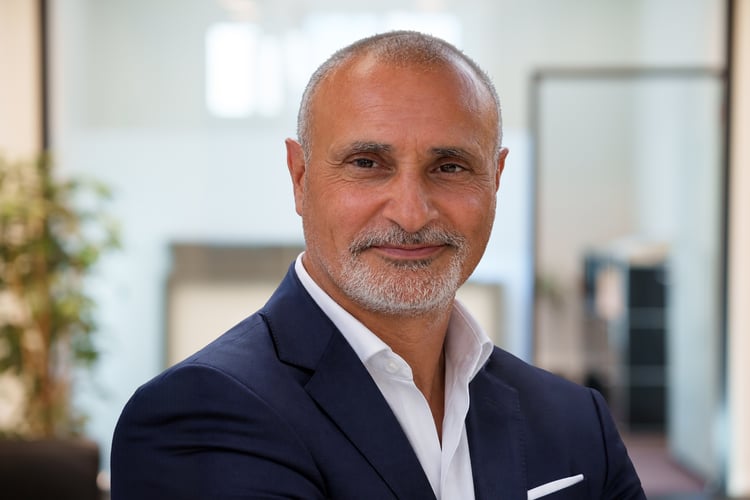
In the picture: Dominique Trovato, Head of Distribution for French-speaking Switzerland at Founders Bank, responsible for distribution services for Tellco pk.
Where do pension gaps come from?
Lower salaries result in lower retirement savings contributions. The provisions of the Swiss Federal Occupational Pensions Act (BVG) further amplify this effect. Under the mandatory occupational pension scheme, the entry threshold is an annual salary of CHF 22,680 in 2026. As a general rule, individuals earning less than this amount are not required to be insured with a pension fund. In addition, the coordination deduction of CHF 26,460 reduces the insured salary, regardless of the level of employment. As of 1 January 2027, the entry threshold will increase to CHF 23,040 and the coordination deduction to CHF 26,880.
Consider the following example: An employee working at a 50% employment rate and earning an annual salary of CHF 40,000 has an insured salary of just CHF 13,540 under the statutory minimum requirements applicable in 2026. If the coordination deduction were reduced by half in proportion to the employment rate, the insured salary would increase to CHF 26,770. From 2027 onwards, with the same annual salary, the insured salary under the statutory minimum requirements will amount to CHF 13,120 (CHF 40,000 minus CHF 26,880). However, if the coordination deduction were reduced by half to CHF 13,440, the insured salary would increase to CHF 26,560. This adjustment increases the basis for calculating retirement savings contributions and, depending on the pension solution, may also increase the basis for calculating risk benefits. This shows that the employment rate is not the only decisive factor for pension provision: the design of the pension solution also plays a key role.
The pension solution offers the greatest leverage
When selecting and regularly reviewing their pension fund solution, employers should look beyond simply comparing contributions and administrative costs. What really matters is which components of an employee's salary are insured. An adjusted or eliminated coordination deduction can improve pension provision for part-time employees. The entry threshold can also be lowered to give employees with a low employment rate access to the second pillar.
Other options include increasing retirement savings contributions or providing a higher financial contribution from the employer. By covering a share of the contributions that exceeds the statutory minimum, employers can strengthen employees' retirement savings without reducing their net salaries to the same extent. Before making any decisions, it is advisable to run simulations: What would the adjustment cost the company? How would salary deductions change? And what additional benefits could employees expect in the long term? Good pension provision is an integral part of an attractive employment policy.
However, pension solutions cannot be designed arbitrarily for individual employees. They must comply with legal requirements and be defined transparently for clearly specified categories of insured persons. This requires consultation with the pension institution.
Consider multiple jobs and the importance of communication
People who hold several part-time jobs are particularly exposed to pension gaps. Someone earning CHF 20,000 per year from each of two different employers does not reach the BVG entry threshold with either employer. Under certain conditions, voluntary affiliation is nevertheless possible, in particular through the Substitute Occupational Benefit Institution or the pension fund of one of the employers. Employers can inform their employees about these options and examine the extent to which income from other jobs can also be insured.
This issue also remains on the political agenda: a consultation procedure launched by the Federal Council in October 2026 includes proposals concerning BVG coverage for income from secondary employment. The proposed measures have not yet entered into force. Employers should monitor these developments without waiting for new legal provisions before taking action.
Communication is just as important as the pension solution itself. At the start of employment, following a reduction in working hours or after a family-related career break, employees should be informed about how their salary and employment rate affect their insured benefits. Easy-to-understand pension statements, individual consultations and information about voluntary buy-ins to the pension fund or contributions to Pillar 3a help employees make informed decisions. Employers offering flexible working models should therefore also consider their long-term consequences. In this way, a legal obligation becomes a tangible contribution to employees' financial security and a credible sign of appreciation.